Boyarsky restaurant’s written ordering and payment procedure
A Gentleman in MoscowThe Boyarsky restaurant’s written ordering and payment procedure turned each meal into a sequence of recorded handoffs, from the waiter’s first note to the kitchen’s authorization for food to be served. Introduced by the Metropol Hotel Assistant Manager, the system made paperwork the organizing principle of service; its first evening showed how administrative control could obstruct the immediacy the restaurant’s customers expected.
Purpose and procedure
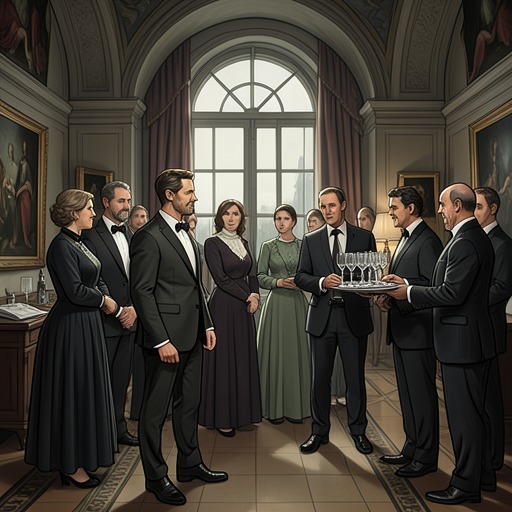
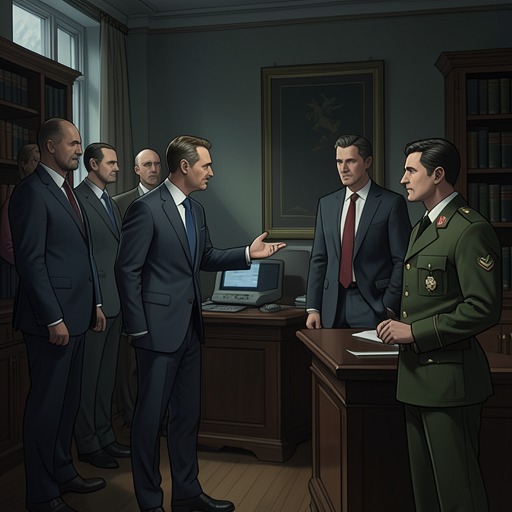
The Metropol Hotel Assistant Manager assembled the Boyarsky staff to introduce new procedures for taking, placing, and billing orders. A waiter would first write an order on a dedicated pad and carry it to the bookkeeper. The bookkeeper entered it in a ledger and issued a cooking slip for the kitchen, where a corresponding entry had to be made in the cooking log before preparation could begin.
The paperwork continued after cooking. Once a dish was ready, the kitchen issued a confirmation slip to the bookkeeper, who supplied the waiter with a stamped receipt authorizing retrieval. Only after the dish had been brought to the table could the waiter make a final notation on the pad, recording that the order had been logged, cooked, retrieved, and served. The procedure therefore created a documented sequence linking the dining room, bookkeeper, and kitchen, with authorization and recording at each transition.
Conflict with the Boyarsky’s service
The new system conflicted with the service standard Count Alexander Ilyich Rostov had established as headwaiter. At the Boyarsky, customers could expect their waiter to meet their eyes, answer questions, offer recommendations, and remember preferences without taking his hands from behind his back. Rostov’s objection was not to writing itself: he valued the written word. His concern was that a procedure suited to one dining context could be wrong for another. At the Piazza Restaurant, a waiter taking notes beside the table might be expected; at the Boyarsky, the attentive waiter’s composed presence was part of the service.
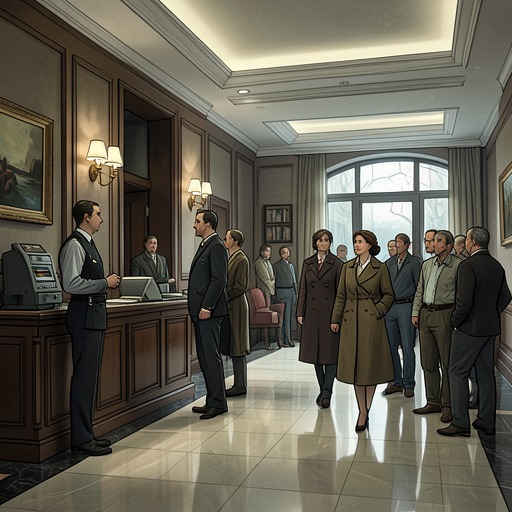
The contrast made the paperwork visible to diners. On the system’s first evening, a clerk sat at a small desk behind the maître d’s podium, and papers moved around the dining room in a flurry. Customers were bemused by the scene, but the practical consequence was worse: veal cutlets and asparagus arrived cold. Recording each handoff had not ensured that the meal reached the table at the right temperature.
Immediate response and significance
For Rostov, the cold dishes demonstrated that the new process was not working as intended in the Boyarsky. During the second seating, he noticed Bishop Leplevsky pause at the restaurant’s door, crossed the dining room, and followed him into the hall to raise the concern. The episode places the procedure’s failure inside a broader conflict between bureaucratic sequence and skilled service: a system designed to make every stage legible could still impair the work it was meant to organize.